
A Painting and Book for the Dartmouth Museum
My lifelong interest in Dartmouth, Devon, and two unique maps produced in 1619 for a dispute over a right of way, inspired this painting. It aims to depict what life might have been like in August 1620, when the Mayflower and Speedwell departed from the port bound for North America with the Pilgrims who formed the founding colony in New England. The large painting on canvas, “Dartmouth in 1620” is on display alongside the Mayflower Exhibition which opened at the Dartmouth Museum, Butterwalk, on 23 October 2021.
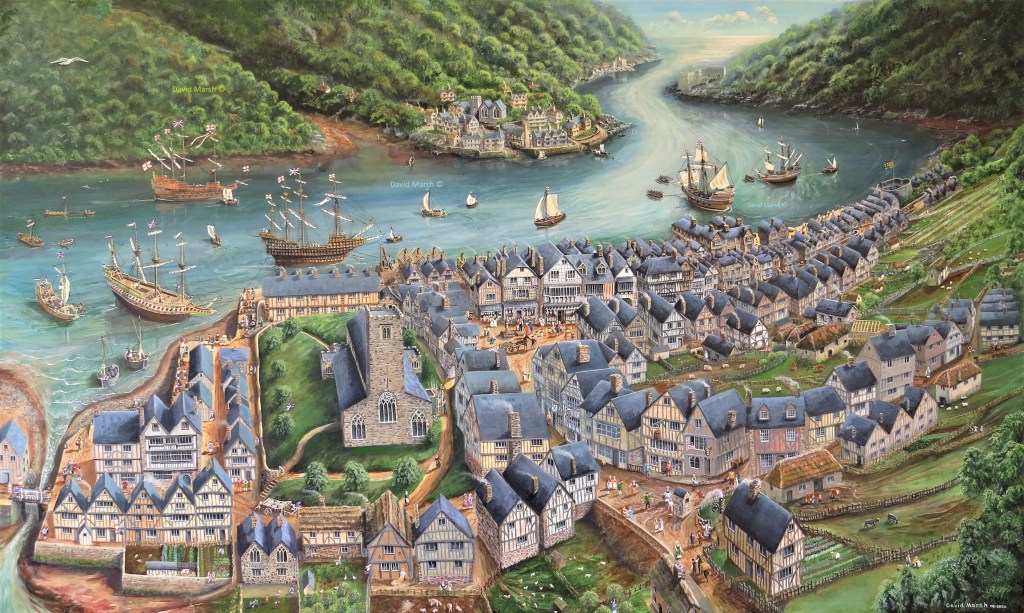
A small book (36 pages), ‘Life in Dartmouth in 1620’ based upon research and maps, with contributions from local historians, using local records and other reference material is available from the Dartmouth Community Bookshop, the Dartmouth Visitor Centre and the Dartmouth Museum*.
The following notes give a flavour of the history and information in the painting and book.
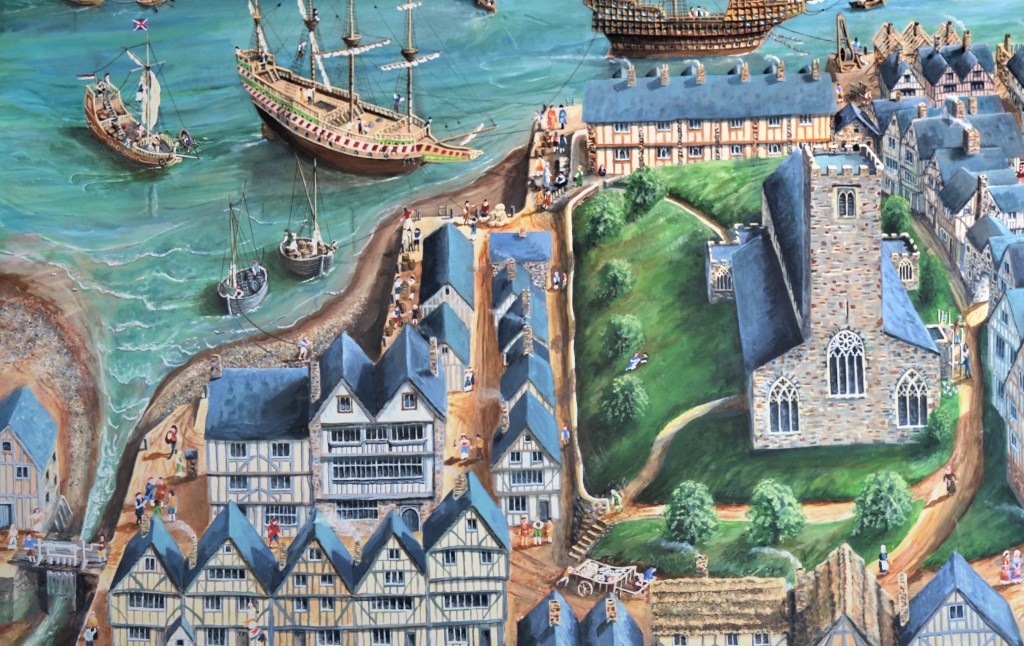
The Port and New Quay
Dartmouth was a busy and affluent port with a well-fortified harbour in the early 17th century; a base for merchants and privateers, supporting the industries, trades and farms serving Totnes, Ashburton and surrounding areas. Plans were being implemented for the expansion of the town and quay and enlargement of the church.
The long estuary of the Dart river provided a natural sheltered deep water harbour with extensive anchorage for many ships. The North Atlantic fish trade helped to make it comparatively wealthy. Just imagine the industry supporting 30-40 ships leaving Dartmouth in the spring each year and returning between September and December with dried and salted fish from Newfoundland, and wines, olives and fruits from Spain!
The Dispute over the Foss in 1619
The Dartmouth Corporation was involved in a dispute in 1619 with John Roope, a merchant who owned the two mills on the Foss dam. He wanted to prevent people using the bridges across the mill gates which he claimed were his private property. The Corporation argued the Foss was a public right of way.
Two maps were prepared by Nicholas Townsend for the Corporation, copies of which are on display at the Museum and are shown in the book. The sketch map opposite has been created in 2020 from the research and various records and maps.

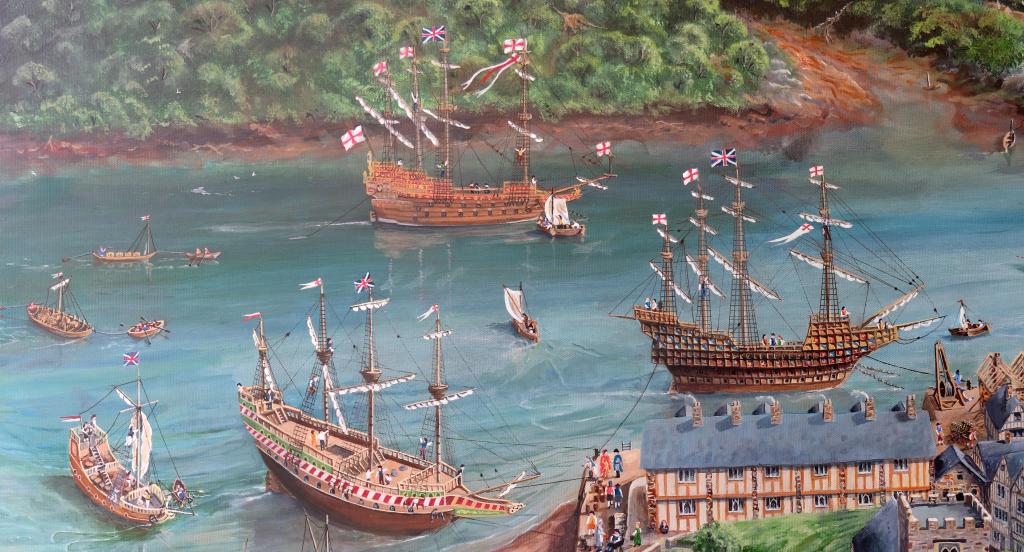
Ships in 1620
Dartmouth would have seen ships of many different types performing a variety of tasks and preparing for voyages during 1620. Three ships in the painting are specific ships of the Kings Navy which are identified in the book and could have engaged pirates in the English Channel or its western approaches.
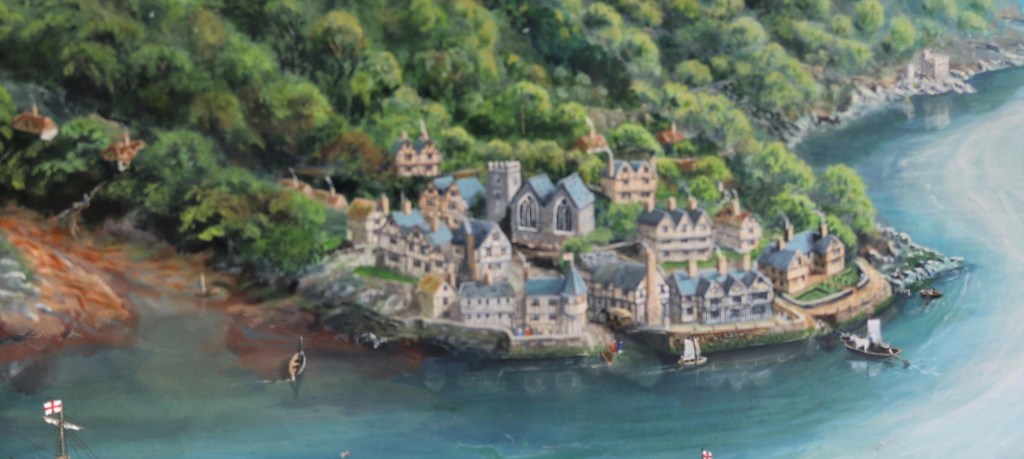
Kingswear
The painting shows the settlement of Kingswear on the eastern bank of the river Dart, a small village, including merchants’ houses, cottages, quays and warehouses. On the western most tip of Kingswear was an area known as Kittery, which is thought to have connections to Kittery, said to be the oldest town in Maine, New England, USA.
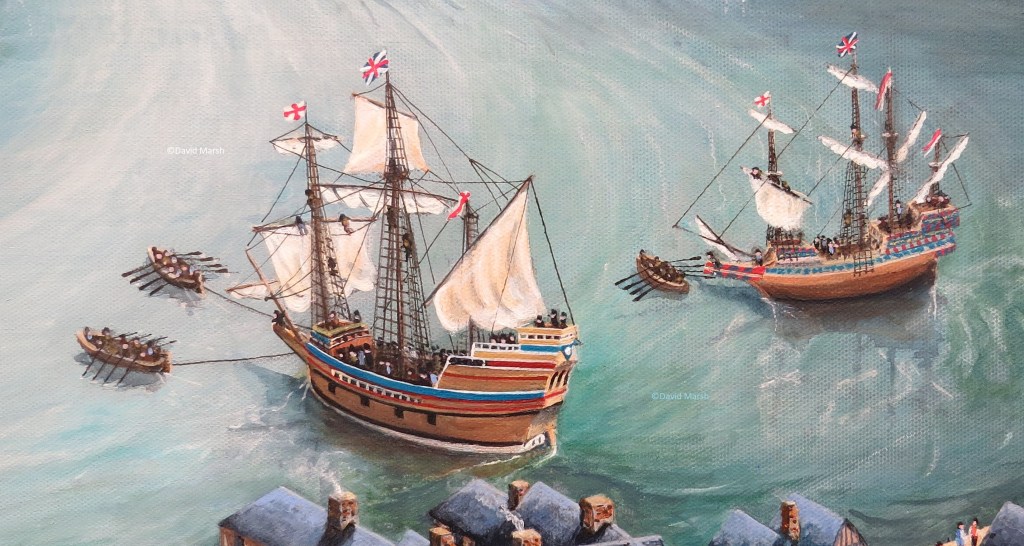
Mayflower and Speedwell visit Dartmouth in 1620
The book ‘Life in Dartmouth in 1620’ and this painting provide just a passing mention of the Mayflower. There are many publications about the voyage of the Mayflower and Speedwell, however no actual log of the ships’ journey has survived. The Mayflower originally departed from London, and the Speedwell from Delfshaven in Holland, to make a planned rendezvous at Southampton before heading out along the English Channel bound for America.
The Speedwell became “leaky as a sieve” and the two ships visited Dartmouth to repair the Speedwell on or about 13 August. The ships are thought to have anchored in the Dart for seven to ten days. They left Dartmouth “with good hopes” of a safe crossing to America, but great difficulties and events occurred in the next few days, and in the decades that followed. As one of the earliest pilgrim vessels, the Mayflower has become a cultural icon in the history of North America.
David Marsh – October 2021
The painting ‘Dartmouth in 1620’ has been donated to the Dartmouth Museum with all other items in the collection relating to the painting and book ‘Life in Dartmouth in 1620’. Prints and other products using this image may be available from the Dartmouth Museum at a lower price than shown in my shop. Any enquiries relating to the images or products for any purpose must be directed to the Museum using the form on their website at:
ttps://www.dartmouthmuseum.org/contact-us/
All paintings on this site are subject to copyright, the use of any images or text from this site is prohibited unless prior written permission is obtained.
 David Marsh, Artist